
June 19th, the third day in the Mountains
One of this trip’s major themes has been our wish to move to Japan in 2026. We often fantasize about living in Kamakura, a small and gorgeous seaside city, 50 kilometres southwest of Tokyo.
I’m completely frightened by the idea of leaving Europe, but at the same time, I can’t wait for the adventure to start. I lived in Japan before, and I loved it.
It is just very different to make decisions when you have children. If it were just me, I would have lived in Paris now and I’d move to Japan in a heartbeat. But since I have children, my biggest fear is not doing the right thing for them.
I love Paris, but it can be so grim. The educational system seems quite hard on kids, starting at three years old and continuing until late in the afternoon. Don’t most people move to Northern Europe for education? I know quite some Japanese families, who went to the Netherlands for that reason. Those still living in Japan are aware that Dutch education is ranked amongst the best worldwide. They know that Maria Montessori spent decades in the Netherlands, and how her influence made it a wonderful place for Montessori education – something that would cost a small fortune in Japan.

Japanese Education
It is early morning, around 6. Julien and Ima are still sleeping. I am in the kitchen with Yachan, Michael and Lila preparing our coffee and breakfast. I mention our intention to move to Japan and share what keeps me awake: our kids’ education. Should they go to a public, Japanese school? I already know I don’t want them to attend an international school, but I really wish I could provide them with Montessori or Steiner education – or at least something with a broader view.
“The moment kids enter elementary school, they are separated into boys and girls and they literally do other things”
Yachan and Micheal have nothing good to say about Japanese education. Both of them have worked in schools in Tochigi, and they immediately confirm my biggest fear: Japanese education is traditional and reinforces gender roles on children from the earliest age as possible.
The night before, I told them the story about Lila in Tokyo, how she wanted to eat some of the food we had brought to a restaurant. When I refused and explained to her that it was impolite to eat food other than what the restaurant served, she went inside – we sat on the terrace – to find the staff, came back triumphantly and announced she had asked for permission – it was ok to eat our own food.
“They will break her spirit”, says michael. “She has an independent mind and they don’t want that in japan.”
“The moment kids enter elementary school, they are separated into boys and girls and they literally do other things”, says Yachan.
“Think about it”, says Michael, “there are no female politicians in japan. And if there is one , by exception, she is responsible for daycare and kids education.”
I probably look a bit defeated, because he softens his tone and says: “But she has you as her parents. If you show her, things can be different, she will be alright. And Tochigi, where we worked, might be different from Tokyo. It’s the countryside after all.”
Do I want “alright” for my kids?

Akiyas, Abandoned Houses, Everywhere
We have breakfast together and decide to go to the onsen. It is about time; I start to feel dirty. They don’t have running water, so no bath and shower and it’s been three days. It has been warm and normally I jump straight into the shower after public transport – even though Japan is so clean.
The onsen is a 45-minute ride. We leave the bumpy part of the mountain road behind and travel along a country road, passing by rice fields and mountains. The night before, Julien and I speculated how often Michael and Yachan visit the onsen when we are not there. Every three, four days? Once a week?
“Twice a month”, Yachan answers.
Oh, how they love to shock.
“So basically, you only leave the mountain twice a month?”
“Yes, as little as possible.”
The surroundings are magnificent. The forests look so dense and bright green, especially under today’s grey June sky. Every now and then we pass a house. They usually look old, but are often well maintained. Sometimes Michael points out akiyas, abandoned houses. This part of Japan is full of these kind of houses.
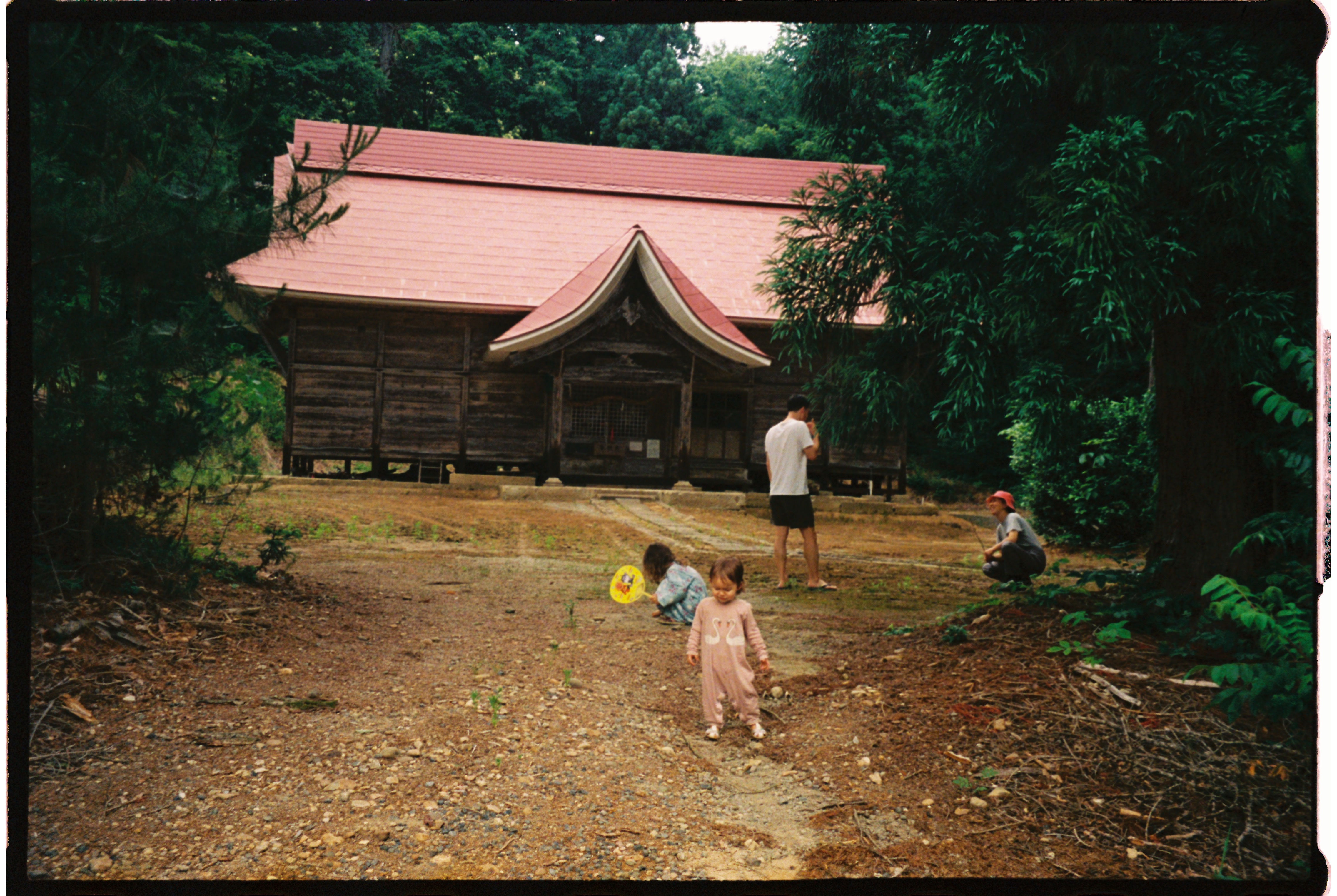
Halfway we make a brief stop to visit a shrine. We have to walk up a mountain and find it hidden in the greenery. It’s desolate too, but beautiful.
We pass a big, traditional looking empty house that Michael and Yasuka had wanted to buy, before settling on their current home. Michael explains the house has agricultural ground, which means there is a specific committee that decides who can buy this ground. Foreigners certainly can not! It is still empty and it looks kind of sad.
One of the major problems in Japan is that a lot of land is owned by dead people and the government can’t do anything about it.
“Why not?”, I ask. “Can’t they just confiscate the land if the taxes aren’t being paid?”
“No, they can’t, because they need permission, but obviously, that’s not possible.”
“That’s very strange.”
“Yes, but no politician dares to burn their hands on this matter.”
Apparently there are around ten million akiyas in Japan. Around this, a movement is emerging with people – foreigners included -, buying up these houses for nothing and renovating them. Julien is super intrigued by it. On Instagram and YouTube you can find many such projects to follow.
“What do you actually do with your garbage?”, I ask, “I mean, I suppose you have very little of it, but you do have some.”
“Well that’s kind of a problem.”, says Micheal. “Every now and then, we drive up to Tochigi to bring our garbage to Yachans parents. We are not part of the district here. We weren’t allowed to join, because I’m a foreigner. It’s kind of a mafia. They also told us the fire brigade won’t come if our house is on fire.”
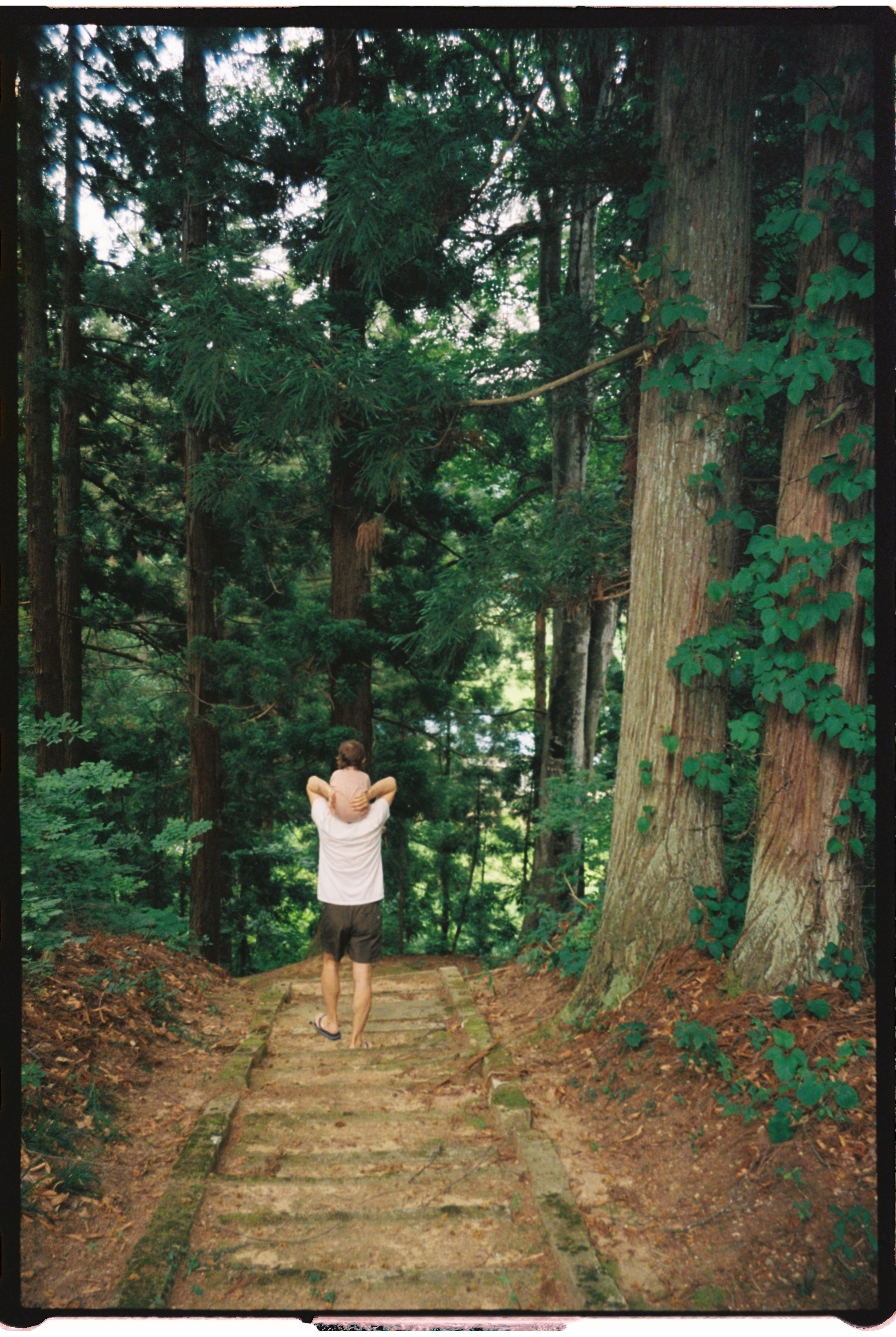
The onsen is situated in a hotel. It is quiet when we arrive, and we spend a long time soaking in the warm water in an empty onsen. Julien and Michael, Yachan and I with the girls.
After the onsen, we visit a big countryside supermarket, where I buy some food that we can bring the next day, when we will travel to Tochigi to meet with Julien’s family. Rice crackers, dried fruits, and sweet potatoes that I will wrap in foil and put in the oven at Michael and Yachan. Ima loves that! I also buy some food of which I am certain Lila will eat it. She is only four years old, and I shouldn’t worry too much, but actually I do worry all the time.
That night we all eat the leftovers of the past days. Except Lila, who eats rice, natto and raw paprika, because I need her to eat well for once. Michael opens a bottle of homemade umeshu, plumwine, and we cheers to the last night.
I ask if they often drink. “Only when people visit”, Michael jokes.
Leave a Reply