
June 18th, continuation of the second day in the mountains
We are sitting in the living room of the house on top of a mountain in Yamagata. The end of the day is near. The only physical exercise we had today was a short, but intense walk to the well. Yet, the day went strangely fast.
The sky is turning bright pink. The kids are drawing an reading with Yachan. Micheal, Julien en I are still talking and catching up after not seeing each other for two years.
Michael wants to let go of his belongings. Julien wants to let go of his expectations. He believes people should not have expectations of each other. Living by the proverb, “be tolerant with others and strict on yourself”, I agree he surely is soft and tolerant with others and has little expectations. He brought me some insights when he once pointed out how some people believe in the same wisdom, but the other way around: they are tolerant with themselves and strict on others. Those kinds of people tend to have lots of expectations. Although Julien hardly ever dislikes anyone, I know he doesn’t feel comfortable around these kinds of people.

Michael agrees with Julien, but I have some doubts. It’s not that I think having expectations of others is good. In fact, they are often inconvenient. You can easily get disappointed or even hurt. At the same time, not being able to expect anything of the people close to you, seems like one of the diseases of a modern, individualist society. It feels rather hopeless, like you can’t count on anyone around you anymore.
When I was a teenager, my parents would tell me that they didn’t expect me to take care of them when they would grow old. They believed I shouldn’t waste my life on them or let them become a burden. I would listen to them and confirm. Sure. I’ll put you in an old people’s home and I’ll come visit you once a week. Yes, they’d say, that’s what you should do.
I carried those values into my first pregnancy. I vividly remember being pregnant with Lila and explaining Julien how our baby would have to go to daycare four days a week, so I could work. And sleep in her own room from six months old. Not in our bed like his family was doing in Japan. We were a couple. She had to be independent. And I had to remain independent. My child could not direct my life. She could not be a burden. That’s how I grew up. That is what I learned from society. As a woman I was aware my ancestors fought for my right to be an independent woman, before being a mother.
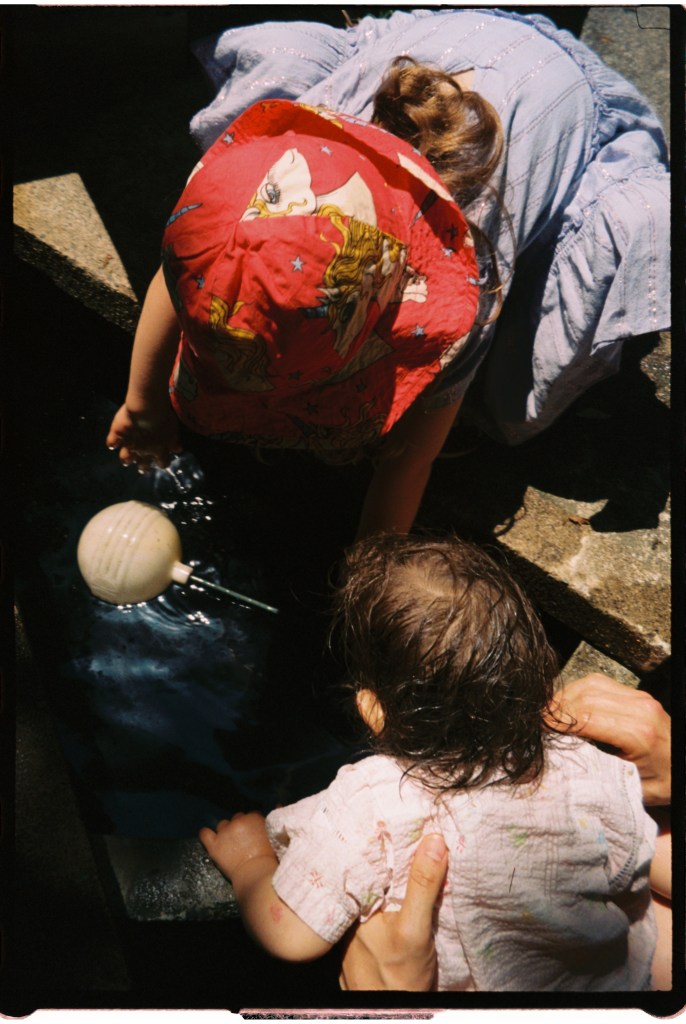
The moment Lila was born something fundamentally changed. While holding this tiny new life on my bare chest, I literally told Julien: “I changed. I’m not the same person anymore.” I couldn’t imagine putting her in her own room. It felt so strange to separate from her, after she had been inside me for all those months. Even the co-sleeper felt too far away. Everything I had once accepted as normal began to feel unnatural and alien to me. Why do we train babies to be independent? Placing them in separate rooms, sleep training, and discouraging co-sleeping? Why had I had all these thoughts? Everything seems designed to prioritize efficiency and minimize expectations. It felt as though, along with birthing a child, I had also birthed a new set of values—ones I barely recognized and needed to understand.
“Everything seems designed to prioritize efficiency and minimize expectations.”
Going through this transformation and caring for my first child made me think about my own upbringing. Was it traditional to care for my baby this way? Was it strange to feel I’d gladly offer my parents a room in my home if they needed it? Not much later my mother left and it became an even sadder thought that my father would probably not even accept me to take care of him and make him feel safe, when he would become more vulnerable.
“I think I want to live in a world where I can actually have some expectations of the people close to me.” I say, “moreover, I want the people close to me to have expectations and to exchange them with me. Of course, we should not be unreasonable, but can we take care of each other?”
Juliens says he talks about a different type of expectation. Did I drift off? Yet, social norms and expectations all seem so related. We all wonder: what is expectation anyway?
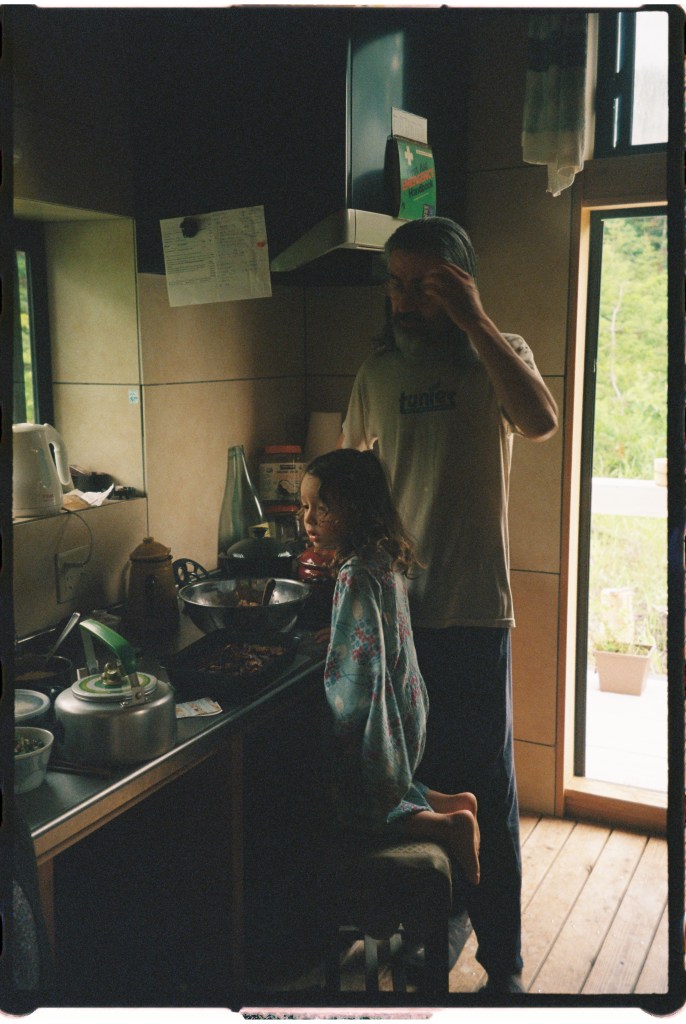
Michael continues that expectations are frustrating and useless, even though some expectations are meant well. He used to have great expectations of people, but they’d never act in the way he anticipated and it frustrated and moreover disappointed him immensely.
“It’s better to not have any expectations. I’ve been an activist for the majority of my life and I’ve come to realize: it’s not the answer.”
“Do you watch the news every now and then?”, asks Julien.
“No”, Michal answers, smiling happily.
“There is a war in Europe and Isr@el has destroyed 90% of G@za including thousands of kids”, he quickly adds.
“40.000 people, of which half of them are children”, I add.
“Sorry to bring the news,” Julien says, jokingly.
“I don’t want to know it anymore”, says Michael. “I’ve been an animal activist for 30 years, but I don’t believe it’s the right thing to do anymore.”
“Really?”, I ask. “I’ve just started going to demonstrations. I have the feeling people have completely stopped demonstrating and I’m ready to start using my voice finally. That’s all I have.”
“Right”, he says. “But you are wrong.”
“What else can I do?”
“Nothing.”
I understand this feeling very well, but since I have children, I simply have to do something. I can’t do “nothing” anymore. I can’t tell them I didn’t do anything. It’s been so very awful what has been happening. I don’t think I’ve ever felt so powerless. I’ve seen so many children dying on my screen over the past months.
I feel tears burning and soon they are rolling down my face. I hate it when I cry. I’m not weak and sad. It’s because I’m so very angry and devastated.
“Look, you feel angry and negative and what does all that energy do to the world?” Michael replies to my frustration.
For a moment I’m speechless. I have always felt so connected to Michael. It doesn’t fit with him to say this. If Yasuka would say this, I’d accept it. She has a much calmer spirit that he has. Michael is opinionated. I can see that fire in him, even though it might not be burning like it used to. Is this what Japan does to people? Make them calm and have them think about the impact of negative energy and such? I know that there is a truth in these thoughts, it’s just that I’m not there yet.
“Michael, but I have nothing else but my voice,” I say. “I’m powerless. I brought two kids into this world. All I can do is shout, support, and try to rally others.”
“You are wrong,” he says. “But probably I’m wrong as well.”
We are silent for a while.
“I have the idea that there are three types of people on the earth,” Michale breaks the silence. “Fighters – those are the bombers, but also the activists. Accepters – those are the people that don’t do anything and therefore accept the current status. And a tiny bit of the population is detached, but connected, like I am now.
You know, Australia has three kinds of people. The original inhabitants, of which a lot were wiped out when the English arrived. Criminals and police. My family is clearly descending from those criminals. I went to my first demonstration when I was seven years old and I was taken straight to the police station. My dad was an activist. He went because he wanted to fight. I too became an activist. I’ve been demonstrating so much. My point of view was that if you don’t go to Gaza to kill some IDF soldiers, you accept the current situation. But what does all this anger and negative energy do to our world? I believe it’s wrong what I have been doing. And I don’t know if what I am doing now is right, but I know what I want. I want to be at peace with my surroundings when I die. I don’t want to need all these objects. I don’t want to be angry. I want to feel so deeply connected to everything around me that I can leave in peace.”
“Please give me some books,” I say. “Literature, music and art are some of the only men made products that make humans at least a bit lovable.”
We all agree to that.
Homemade Dinner and Pompoko
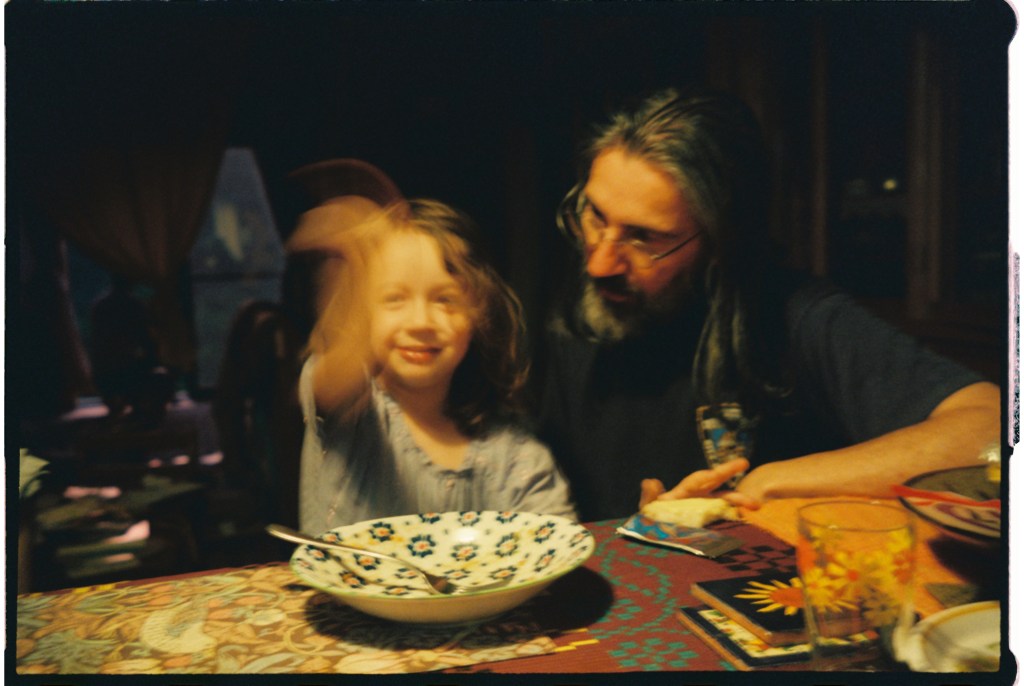
That night we enjoy Michael’s homemade dinner – couscous with eggplant cooked in tomato sauce and homemade bread. It’s amazing, as usual. After spending over a week running around in Tokyo, being here feels so wholesome. I deeply cherish these moments of not doing anything, but talk and be. Although the subjects have been quite confronting, Michael and Yachan are in their own beautiful way such a positive force.
Lila refuses to even try the food. She eats nothing. Not even a bite of plain couscous. At some point, we let her leave the table and watch something. Pompoko again, for the second night. Distracted by the screen, we successfully sneak some of Michaels homemade bread with lots of butter into her mouth. I know I shouldn’t worry, but I always do…


Leave a Reply